Thursday, April 29, 2004
Which country are you?
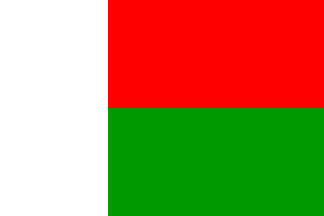
You're Madagascar!
Lots of people don't really know anything about you, making you
buried treasure of the rarest kind. You love nature, and could get lost in it
whenever possible. You're remote and exotic, and the few people who know you
value whatever they share with you a great deal. For some reason, you really
like the word "lemur".
Take
the Country Quiz at the href="http://bluepyramid.org">Blue Pyramid
Wednesday, April 28, 2004
This list is supposedly circulating around the blogging world. One is supposed to highlight or bold the books one has read. FromLatino Pundit
I don't think it's a particularly good or complete reading list, but it is the standard curriculum in most first year literature courses in North American universities. And then there is my critique of fiction per se, but I won't get into that ;)
Beowulf
Achebe, Chinua - Things Fall Apart
Agee, James - A Death in the Family
Austen, Jane - Pride and Prejudice
Baldwin, James - Go Tell It on the Mountain
Beckett, Samuel - Waiting for Godot
Bellow, Saul - The Adventures of Augie March
Bront�, Charlotte - Jane Eyre
Bront�, Emily - Wuthering Heights
Camus, Albert - The Stranger
Cather, Willa - Death Comes for the Archbishop
Chaucer, Geoffrey - The Canterbury Tales
Chekhov, Anton - The Cherry Orchard
Chopin, Kate - The Awakening
Conrad, Joseph - Heart of Darkness
Cooper, James Fenimore - The Last of the Mohicans
Crane, Stephen - The Red Badge of Courage
Dante - Inferno
de Cervantes, Miguel - Don Quixote
Defoe, Daniel - Robinson Crusoe
Dickens, Charles - A Tale of Two Cities
Dostoyevsky, Fyodor - Crime and Punishment
Douglass, Frederick - Narrative of the Life of Frederick Douglass
Dreiser, Theodore - An American Tragedy
Dumas, Alexandre - The Three Musketeers (movie)
Eliot, George - The Mill on the Floss
Ellison, Ralph - Invisible Man
Emerson, Ralph Waldo - Selected Essays
Faulkner, William - As I Lay Dying
Faulkner, William - The Sound and the Fury
Fielding, Henry - Tom Jones
Fitzgerald, F. Scott - The Great Gatsby
Flaubert, Gustave - Madame Bovary
Ford, Ford Madox - The Good Soldier
Goethe, Johann Wolfgang von - Faust
Golding, William - Lord of the Flies
Hardy, Thomas - Tess of the d'Urbervilles
Hawthorne, Nathaniel - The Scarlet Letter
Heller, Joseph - Catch 22
Hemingway, Ernest - A Farewell to Arms
Hugo, Victor - The Hunchback of Notre Dame (movie)
Hurston, Zora Neale - Their Eyes Were Watching God
Huxley, Aldous - Brave New World Homer - The Iliad
Homer - The Odyssey
Ibsen, Henrik - A Doll's House
James, Henry - The Portrait of a Lady
James, Henry - The Turn of the Screw
Joyce, James - A Portrait of the Artist as a Young Man
Kafka, Franz - The Metamorphosis
Kingston, Maxine Hong - The Woman Warrior
Lee, Harper - To Kill a Mockingbird
Lewis, Sinclair - Babbitt
London, Jack - The Call of the Wild
Mann, Thomas - The Magic Mountain
Marquez, Gabriel García - One Hundred Years of Solitude
Melville, Herman - Bartleby the Scrivener
Melville, Herman - Moby Dick
Miller, Arthur - The Crucible
Morrison, Toni - Beloved Proust, Marcel
O'Connor, Flannery - A Good Man is Hard to Find
O'Neill, Eugene - Long Day's Journey into Night
Orwell, George - Animal Farm
Pasternak, Boris - Doctor Zhivago
Plath, Sylvia - The Bell Jar
Poe, Edgar Allan - Selected Tales
- Swann's Way
Pynchon, Thomas - The Crying of Lot 49
Remarque, Erich Maria - All Quiet on the Western Front
Rostand, Edmond - Cyrano de Bergerac
Roth, Henry - Call It Sleep
Salinger, J.D. - The Catcher in the Rye
Shakespeare, William - Hamlet
Shakespeare, William - Macbeth
Shakespeare, William - A Midsummer Night's Dream
Shakespeare, William - Romeo and Juliet
Shaw, George Bernard - Pygmalion
Shelley, Mary - Frankenstein
Silko, Leslie Marmon - Ceremony
Solzhenitsyn, Alexander - One Day in the Life of Ivan Denisovich
Sophocles - Antigone
Sophocles - Oedipus Rex
Steinbeck, John - The Grapes of Wrath
Stevenson, Robert Louis - Treasure Island
Stowe, Harriet Beecher - Uncle Tom's Cabin
Swift, Jonathan - Gulliver's Travels
Thackeray, William - Vanity Fair
Thoreau, Henry David - Walden
Tolstoy, Leo - War and Peace
Turgenev, Ivan - Fathers and Sons
Twain, Mark - The Adventures of Huckleberry FinnVoltaire - Candide
Vonnegut, Kurt Jr. - Slaughterhouse-Five
Walker, Alice - The Color Purple
Wharton, Edith - The House of Mirth
Welty, Eudora - Collected Stories
Whitman, Walt - Leaves of Grass
Wilde, Oscar - The Picture of Dorian Gray
Williams, Tennessee - The Glass Menagerie
Woolf, Virginia - To the Lighthouse
Wright, Richard - Native Son
Tempting as it was, I refrained from counting the books I've started (but didn't finish) on this list. I do think we should be allowed to highlight the name of the author only if we have read (and finished) something else by them not mentioned on the list, and I've done that ;)
I don't think it's a particularly good or complete reading list, but it is the standard curriculum in most first year literature courses in North American universities. And then there is my critique of fiction per se, but I won't get into that ;)
Beowulf
Achebe, Chinua - Things Fall Apart
Agee, James - A Death in the Family
Austen, Jane - Pride and Prejudice
Baldwin, James - Go Tell It on the Mountain
Beckett, Samuel - Waiting for Godot
Bellow, Saul - The Adventures of Augie March
Bront�, Charlotte - Jane Eyre
Bront�, Emily - Wuthering Heights
Camus, Albert - The Stranger
Cather, Willa - Death Comes for the Archbishop
Chaucer, Geoffrey - The Canterbury Tales
Chekhov, Anton - The Cherry Orchard
Chopin, Kate - The Awakening
Conrad, Joseph - Heart of Darkness
Cooper, James Fenimore - The Last of the Mohicans
Crane, Stephen - The Red Badge of Courage
Dante - Inferno
de Cervantes, Miguel - Don Quixote
Defoe, Daniel - Robinson Crusoe
Dickens, Charles - A Tale of Two Cities
Dostoyevsky, Fyodor - Crime and Punishment
Douglass, Frederick - Narrative of the Life of Frederick Douglass
Dreiser, Theodore - An American Tragedy
Dumas, Alexandre - The Three Musketeers (movie)
Eliot, George - The Mill on the Floss
Ellison, Ralph - Invisible Man
Emerson, Ralph Waldo - Selected Essays
Faulkner, William - As I Lay Dying
Faulkner, William - The Sound and the Fury
Fielding, Henry - Tom Jones
Fitzgerald, F. Scott - The Great Gatsby
Flaubert, Gustave - Madame Bovary
Ford, Ford Madox - The Good Soldier
Goethe, Johann Wolfgang von - Faust
Golding, William - Lord of the Flies
Hardy, Thomas - Tess of the d'Urbervilles
Hawthorne, Nathaniel - The Scarlet Letter
Heller, Joseph - Catch 22
Hemingway, Ernest - A Farewell to Arms
Hugo, Victor - The Hunchback of Notre Dame (movie)
Hurston, Zora Neale - Their Eyes Were Watching God
Huxley, Aldous - Brave New World Homer - The Iliad
Homer - The Odyssey
Ibsen, Henrik - A Doll's House
James, Henry - The Portrait of a Lady
James, Henry - The Turn of the Screw
Joyce, James - A Portrait of the Artist as a Young Man
Kafka, Franz - The Metamorphosis
Kingston, Maxine Hong - The Woman Warrior
Lee, Harper - To Kill a Mockingbird
Lewis, Sinclair - Babbitt
London, Jack - The Call of the Wild
Mann, Thomas - The Magic Mountain
Marquez, Gabriel García - One Hundred Years of Solitude
Melville, Herman - Bartleby the Scrivener
Melville, Herman - Moby Dick
Miller, Arthur - The Crucible
Morrison, Toni - Beloved Proust, Marcel
O'Connor, Flannery - A Good Man is Hard to Find
O'Neill, Eugene - Long Day's Journey into Night
Orwell, George - Animal Farm
Pasternak, Boris - Doctor Zhivago
Plath, Sylvia - The Bell Jar
Poe, Edgar Allan - Selected Tales
- Swann's Way
Pynchon, Thomas - The Crying of Lot 49
Remarque, Erich Maria - All Quiet on the Western Front
Rostand, Edmond - Cyrano de Bergerac
Roth, Henry - Call It Sleep
Salinger, J.D. - The Catcher in the Rye
Shakespeare, William - Hamlet
Shakespeare, William - Macbeth
Shakespeare, William - A Midsummer Night's Dream
Shakespeare, William - Romeo and Juliet
Shaw, George Bernard - Pygmalion
Shelley, Mary - Frankenstein
Silko, Leslie Marmon - Ceremony
Solzhenitsyn, Alexander - One Day in the Life of Ivan Denisovich
Sophocles - Antigone
Sophocles - Oedipus Rex
Steinbeck, John - The Grapes of Wrath
Stevenson, Robert Louis - Treasure Island
Stowe, Harriet Beecher - Uncle Tom's Cabin
Swift, Jonathan - Gulliver's Travels
Thackeray, William - Vanity Fair
Thoreau, Henry David - Walden
Tolstoy, Leo - War and Peace
Turgenev, Ivan - Fathers and Sons
Twain, Mark - The Adventures of Huckleberry FinnVoltaire - Candide
Vonnegut, Kurt Jr. - Slaughterhouse-Five
Walker, Alice - The Color Purple
Wharton, Edith - The House of Mirth
Welty, Eudora - Collected Stories
Whitman, Walt - Leaves of Grass
Wilde, Oscar - The Picture of Dorian Gray
Williams, Tennessee - The Glass Menagerie
Woolf, Virginia - To the Lighthouse
Wright, Richard - Native Son
Tempting as it was, I refrained from counting the books I've started (but didn't finish) on this list. I do think we should be allowed to highlight the name of the author only if we have read (and finished) something else by them not mentioned on the list, and I've done that ;)
KickAas has mentioned the WTO ruling in this article:kickAAS: The WTO slams cotton subsidies:
"But hang on – isn’t this the same US administration which, according to an exclusive story in the Guardian today is claiming $1.8 billion through the WTO in compensation for the loss of exports to the European Union because of the latter’s ban on genetically modified crops? What was that about having your (subsidized) cake and eating it?"
At least some of us are addressing this issue. A general silence pervades over this issue in much of the leftist blogging out there. It would seem that either many leftist Americans do not follow international trade enough to comment on this, or do not consider world poverty an important enough issue to address. The impact on world poverty from unfair trading has been well documented and well discussed (see, for example, any report from the UN Economic Committee on Latin America and the Caribbean); but many private individuals do not seem to have understood the impact this has on average citizens throughout the world.
Talking about it is the only way to counter this lack of information.
Do most leftists concentrate only on domestic policies?
International criticism would make it seem so. After all, many international observers have pointed out that whether democrats or republicans are in power, American foreign policy remains much the same. And most Americans remain unaware of this.
This is a decision that affects millions of lives of people in the world, and has the potential to help fight world poverty in the long run. But international issues like this seldom figure in leftist American blogs. All too often, attention is directed at domestic issues only, and foreign policy -- the major qualm the world has with the US -- remains in obscurity.
Several wonderful sites have surged as a response to this. Some examples are American Amnesia or Kick Aas.
But overall this information gap when it comes to international politics has yet to be bridged
"But hang on – isn’t this the same US administration which, according to an exclusive story in the Guardian today is claiming $1.8 billion through the WTO in compensation for the loss of exports to the European Union because of the latter’s ban on genetically modified crops? What was that about having your (subsidized) cake and eating it?"
At least some of us are addressing this issue. A general silence pervades over this issue in much of the leftist blogging out there. It would seem that either many leftist Americans do not follow international trade enough to comment on this, or do not consider world poverty an important enough issue to address. The impact on world poverty from unfair trading has been well documented and well discussed (see, for example, any report from the UN Economic Committee on Latin America and the Caribbean); but many private individuals do not seem to have understood the impact this has on average citizens throughout the world.
Talking about it is the only way to counter this lack of information.
Do most leftists concentrate only on domestic policies?
International criticism would make it seem so. After all, many international observers have pointed out that whether democrats or republicans are in power, American foreign policy remains much the same. And most Americans remain unaware of this.
This is a decision that affects millions of lives of people in the world, and has the potential to help fight world poverty in the long run. But international issues like this seldom figure in leftist American blogs. All too often, attention is directed at domestic issues only, and foreign policy -- the major qualm the world has with the US -- remains in obscurity.
Several wonderful sites have surged as a response to this. Some examples are American Amnesia or Kick Aas.
But overall this information gap when it comes to international politics has yet to be bridged
Tuesday, April 27, 2004
Brazil has won a contention in the WTO that could force the US to remove or lower its subsidies on products like cotton.
"Brazil won a preliminary ruling at the World Trade Organization on Monday night that could force the United States to lower the subsidies it pays farmers to grow cotton and, eventually, most subsidized crops.
The decision supports Brazil's contention that the subsidies paid to American cotton farmers violate international trade rules. A final ruling against the United States could lead to stiff penalties if it fails to change its practices. In another recent case involving steel, President Bush chose to remove subsidies and therefore did not have to face the penalties.
The ruling also puts the Bush administration in a tight bind in an election year, when Republicans are counting on support from the Farm Belt. The largest American farmers have grown dependent on the $19 billion they receive in annual subsidies.
If the final decision in June goes against the United States, the administration is expected to appeal, if for no other reason than to delay action until after the election. Nearly all preliminary opinions are eventually upheld by the W.T.O.
As the first successful challenge of a wealthy nation's domestic agricultural subsidies, the Brazilian case could also force the United States, the countries of Europe and other well-to-do nations to act this summer and offer new compromises at global trade talks that have been blocked over this agriculture issue for more than a year."
(Story from the New York Times via the Financial Times)
Perhaps the most important effect of this ruling is that it is a first step against the unfair demands made by many first world nations in trading with the third world. Often the first wolrd nations demand that third world nations eradicate all subsidies, only to continue subsidizing their own products. As a result, third world producers are left unprotected and cannot stay adequately competitive in a market where only first world produces are "allowed" (behind the scenes) to subsidize.
Part of the problem originates with lending institutions like the International Monetary Fund. It is no secret that the IMF, guided by the Washington Consensus forces third world countries to comply with harsh free market rules that not even their first world proponents are willing to live by. This has generated much of the anti-FTAA and anti-globalization movements, in criticism of unfair, "un-free" trade that masks itself as pure market competition when it actually favours only first world nations.
But the decision made by the WTO shows that change is possible. In a landmark case, Brazil -- the third world nation behind much of the anti-globalization movement seen in Cancun in September 2003 during the WTO talks involving over 145 countries -- has won a case against a first world nation that subsidizes while advocating against government subsidies. The US is not the only first world nation guilty of this, but this decision may prove to be a first step towards more equal trading rules.
"Brazil won a preliminary ruling at the World Trade Organization on Monday night that could force the United States to lower the subsidies it pays farmers to grow cotton and, eventually, most subsidized crops.
The decision supports Brazil's contention that the subsidies paid to American cotton farmers violate international trade rules. A final ruling against the United States could lead to stiff penalties if it fails to change its practices. In another recent case involving steel, President Bush chose to remove subsidies and therefore did not have to face the penalties.
The ruling also puts the Bush administration in a tight bind in an election year, when Republicans are counting on support from the Farm Belt. The largest American farmers have grown dependent on the $19 billion they receive in annual subsidies.
If the final decision in June goes against the United States, the administration is expected to appeal, if for no other reason than to delay action until after the election. Nearly all preliminary opinions are eventually upheld by the W.T.O.
As the first successful challenge of a wealthy nation's domestic agricultural subsidies, the Brazilian case could also force the United States, the countries of Europe and other well-to-do nations to act this summer and offer new compromises at global trade talks that have been blocked over this agriculture issue for more than a year."
(Story from the New York Times via the Financial Times)
Perhaps the most important effect of this ruling is that it is a first step against the unfair demands made by many first world nations in trading with the third world. Often the first wolrd nations demand that third world nations eradicate all subsidies, only to continue subsidizing their own products. As a result, third world producers are left unprotected and cannot stay adequately competitive in a market where only first world produces are "allowed" (behind the scenes) to subsidize.
Part of the problem originates with lending institutions like the International Monetary Fund. It is no secret that the IMF, guided by the Washington Consensus forces third world countries to comply with harsh free market rules that not even their first world proponents are willing to live by. This has generated much of the anti-FTAA and anti-globalization movements, in criticism of unfair, "un-free" trade that masks itself as pure market competition when it actually favours only first world nations.
But the decision made by the WTO shows that change is possible. In a landmark case, Brazil -- the third world nation behind much of the anti-globalization movement seen in Cancun in September 2003 during the WTO talks involving over 145 countries -- has won a case against a first world nation that subsidizes while advocating against government subsidies. The US is not the only first world nation guilty of this, but this decision may prove to be a first step towards more equal trading rules.